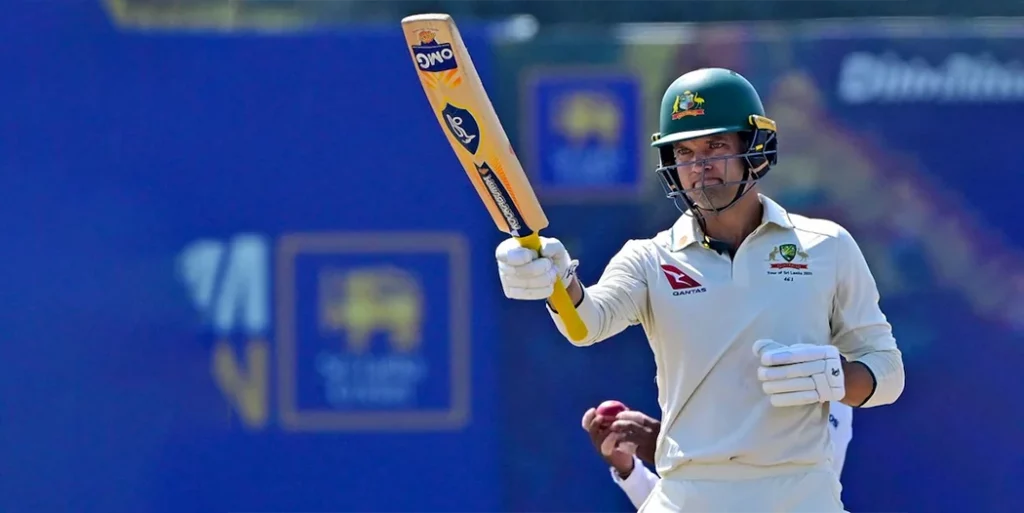
Australia wicketkeeper Alex Carey survived a caught-behind review during his century at Adelaide Oval, admitting he had “a bit of luck” as England considered raising concerns over the Snickometer (Snicko) technology used in the series.
Carey was on 72 runs when he edged the first ball of the 63rd over, bowled by Josh Tongue, and England’s fielders, including wicketkeeper Jamie Smith, immediately appealed. On-field umpire Ahsan Raza gave Carey not out, prompting England to challenge the decision almost instantly.
The Real-Time Snickometer (RTS) showed a spike, but it occurred three or four frames before the ball passed Carey’s bat. TV umpire Chris Gaffaney clarified that the spike happened “before the bat” and the ball seemed to have gone “well under” it, confirming there was a clear gap.
Carey, however, suggested he might have hit it:
“I thought there was a bit of a feather or some sort of noise when it passed the bat. It looked a bit funny on the replay, didn’t it? You have a bit of luck, and maybe it went my way today.”
He emphasized that he is “clearly not” a ‘walker’ and admitted the technology didn’t align perfectly: “Snicko obviously didn’t line up. That’s just the way cricket goes sometimes.”
The ICC currently recognizes two edge-detection technologies: Real-Time Snickometer (RTS) in Australia and UltraEdge elsewhere. Former ICC umpire performance manager Simon Taufel suggested the spike may have been a calibration error:
“The spike occurred before the bat, which is unusual. My gut tells me Carey hit the ball, but the technology misread it.”
England’s bowling coach David Saker noted prior concerns about Snicko throughout the Ashes series:
“The calibration seems off. There have been things that don’t really measure up. We may raise this further with match referee Jeff Crowe.”
This comes after Snicko was already under scrutiny during the first Ashes Test in Perth, when Smith was controversially given out caught behind.
Australia finished Day 1 of the third Ashes Test at 326/8 after choosing to bat first at Adelaide Oval. Alex Carey, who survived a caught-behind review thanks to a controversial Snicko spike, added 34 runs following his reprieve, taking his innings past the half-century mark.
With Gus Atkinson missing the match, Carey reflected on the team’s performance, noting that while there were missed opportunities to capitalize on a strong start, Australia remained very much in the contest.
The team aimed to build a substantial first-innings total, aware that the pitch could become more challenging in the final days, making every run crucial for the match outcome.