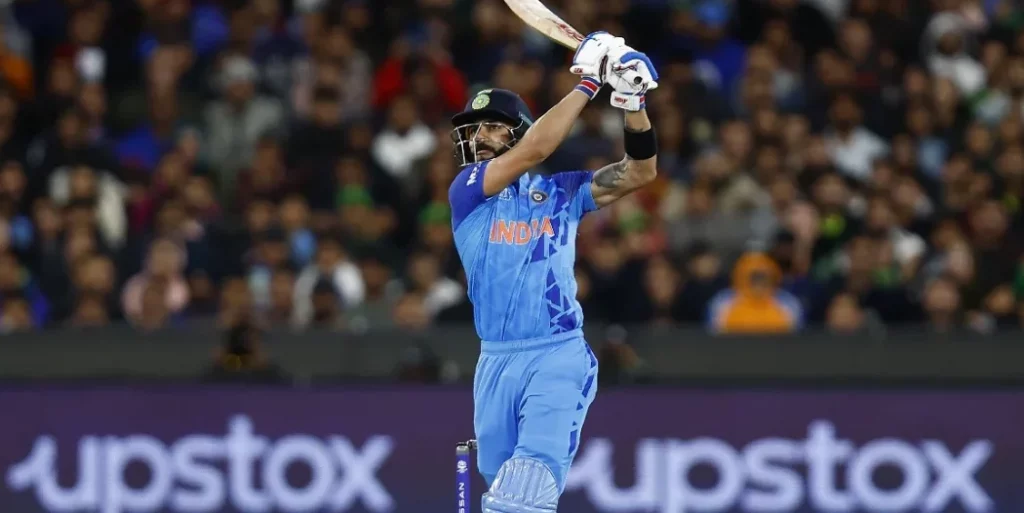
Every run, every wicket and every delivery in cricket tells a story. Among all the stats that fans, coaches and commentators track closely. The strike rate in cricket always stands out as one of the most important numbers.
Whether you are watching a thrilling T20 match or a slow-paced Test game, strike rate plays a key role in how a player’s performance is measured and judged by everyone.
It helps you understand how fast a batter is scoring runs or how quickly a bowler is picking up wickets. Strike rate in cricket is one of the most important performance numbers in the sport.
In this blog, we will explain everything about strike rate in cricket. From its meaning to the formula and format-wise benchmarks, we have covered it all in simple and easy way.
Strike Rate Meaning In Cricket
So what does strike rate means in cricket? Simply it measures how quickly a batsman scores runs or how quickly a bowler takes wickets. It is a performance metric used to judge efficiency.
For batters, a higher strike rate means scoring runs faster. For bowlers, a lower strike rate means taking wickets more often. Strike rate in cricket helps coaches and selectors compare players across formats.
The term SR in cricket is just the short form used in scorecards and statistics tables. You will often see it written as “SR” next to a player’s name during a live match.
How To Calculate Strike Rate In Cricket?
How to calculate strike rate is one of the most common questions among new cricket fans. The formula is simple and easy to remember. Strike rate is an individual stat while net run rate is a team stat used in tournament standings.
Batting Strike Rate Formula :
Batting Strike Rate = (Runs Scored ÷ Balls Faced) × 100
Example: If a batter scores 60 runs off 40 balls, the strike rate is (60 ÷ 40) × 100 = 150.
Bowling Strike Rate Formula :
Bowling Strike Rate = Total Balls Bowled ÷ Total Wickets Taken
Example: If a bowler takes 5 wickets in 120 balls, the bowling strike rate is 120 ÷ 5 = 24.
These two formulas are the foundation of understanding strike rate in cricket at a deeper level.
Batting Strike Rate In Cricket
Batting strike rate directly shows how aggressive or defensive a batter is. A batter with a high strike rate in cricket puts pressure on the opposition and keeps the scoreboard moving at a fast pace.
In T20 cricket, batters aim for a strike rate above 130 to 140. During powerplay overs a high batting strike rate in the first six overs can completely set the tone for the entire innings.
Key Points to Know:
- A higher batting strike rate means the batter is scoring runs quickly and aggressively
- Strike rate changes based on the format – T20 needs higher SR than Test cricket
- Players like Virender Sehwag and Chris Gayle are known for their outstanding SR in cricket
- A strike rate of 60 in Test may be great but the same is very slow in T20 cricket
Bowling Strike Rate In Cricket
Bowling strike rate is equally important but often gets less attention than batting numbers. It tells you how many balls a bowler needs on average to take one wicket in a match.
A lower bowling strike rate is always better. Elite fast bowlers who regularly take wickets during the death overs are highly valued as they can completely change the result of any match.
Key Points to Know:
- A lower bowling strike rate means the bowler takes wickets more frequently and is more dangerous
- It is calculated by dividing total balls bowled by the total number of wickets taken
- Bowling strike rate is used alongside economy rate and average to judge a bowler’s full performance
- Fast bowlers like Waqar Younis and Dale Steyn are known for their outstanding bowling strike rates
What Is a Good Strike Rate In Cricket?
A good strike rate in cricket depends on the format being played. There are different types of cricket matches and each one has its own expectations and benchmarks for both batters and bowlers.
T20 Cricket
In T20 cricket, the game is all about speed and aggression. A batting strike rate of 130 to 150 is considered good. Anything above 150 is exceptional and puts the bowling team under heavy pressure.
Key Points:
- A batting strike rate of 130 to 150 is good in T20 cricket
- Anything above 150 is considered exceptional and match-winning
- For T20 bowlers, a bowling strike rate of 15 to 18 is excellent
ODI Cricket
In ODI cricket, the pace is more balanced than T20. A batting strike rate of 85 to 100 is the standard benchmark. Top-order batters aim for 90+ while finishers push well above 100 in the last overs.
Key Points:
- A batting strike rate of 85 to 100 is considered good in ODI cricket
- Finishers and lower-order batters need a strike rate well above 100
- For ODI bowlers, a bowling strike rate of 30 to 35 is very good
Test Cricket
In Test cricket, patience and technique matter more than speed. A batting strike rate of 50 to 60 is perfectly fine. The focus is on building long innings and wearing down the bowlers over many sessions.
Key Points:
- A batting strike rate of 50 to 60 is acceptable and good in Test cricket
- The focus in Tests is on technique and patience not just speed
- For Test bowlers, a bowling strike rate of 50 to 60 is considered very good
Conclusion
Strike rate is one of the most important numbers in cricket. Batters score runs by targeting gaps in the fielding positions and a good strike rate shows how well they do that. It helps you understand the game better.
Whether it is a T20 match, an ODI match or a Test game, strike rate always matters. Now that you know what it means and how it works, you will enjoy watching cricket even more than before.