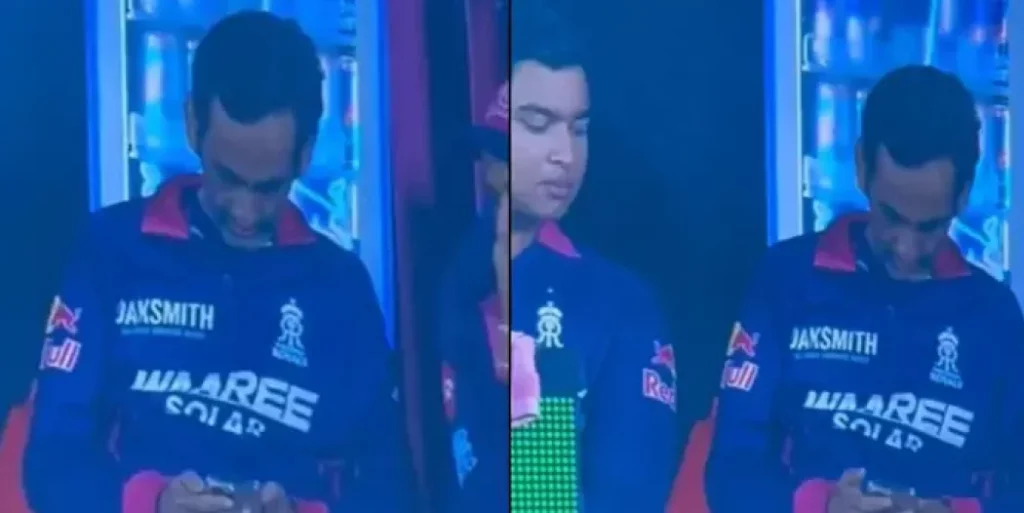
The controversy involving Romi Bhinder has sparked fresh debate around rule enforcement and anti-corruption protocols in the IPL.
During the Rajasthan Royals’ clash against the Royal Challengers Bengaluru, television cameras captured Bhinder using a mobile phone inside the dugout, an action that directly conflicts with the league’s strict operational guidelines.
As per the Board of Control for Cricket in India regulations, mobile phone usage is strictly prohibited in the Players and Match Officials Area (PMOA), including the dugout.
The rules clearly state that team managers are only permitted to use communication devices inside the dressing room. This distinction is critical, as the dugout is considered a sensitive zone where real-time communication could raise integrity concerns.
From an analytical standpoint, the issue goes beyond a simple breach of protocol. The IPL 2026 schedule being one of the most commercially significant leagues in global cricket, maintains strict anti-corruption measures to ensure transparency.
Even minor violations are treated seriously to preserve the credibility of the competition. In this context, Bhinder’s actions, whether intentional or inadvertent, have inevitably drawn attention.
However, there are nuanced aspects to this situation. Reports suggest that Bhinder may have been carrying the phone due to personal medical reasons, adding complexity to the narrative.
While such factors could be considered during the investigation, they do not override the established rules. The final decision will likely depend on the findings of the Anti-Corruption Unit (ACU) and the match referee’s report.
The presence of young talent like Vaibhav Sooryavanshi alongside Bhinder during the incident has further amplified public scrutiny. Visual evidence circulating on social media has intensified fan reactions, raising questions about accountability within team environments.
Importantly, the Rajasthan Royals secured a convincing victory in the match, but the focus has shifted away from on-field performance to off-field conduct. This highlights how quickly controversies can overshadow sporting achievements in high-profile tournaments.
Looking ahead, the BCCI’s response will be crucial in setting a precedent. Whether it results in a warning or stricter disciplinary action, the outcome will reinforce the importance of adhering to established protocols.
For franchises and support staff, this serves as a reminder that compliance is non-negotiable, regardless of experience or intent.
Ultimately, this incident underscores the IPL’s zero-tolerance approach to potential breaches, ensuring the integrity of the game remains intact.