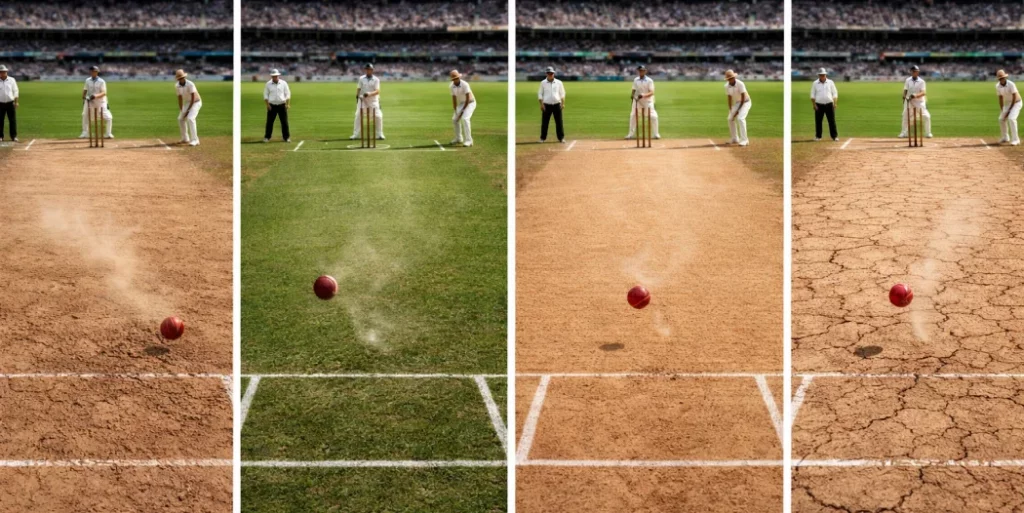
Before every match, fans and experts study the cricket pitch report to understand how the pitch will behave.
This helps predict whether batters or bowlers will get more support and also explains why unusual events, such as a cricket duck, happen early in some matches.
Whether it is an international match or a domestic game, pitch conditions always influence match results. In this blog, we explain different cricket pitch types and how they impact matches in a simple and easy way.
What Is a Cricket Pitch?
A cricket pitch is the rectangular strip in the middle of a cricket ground where the main action takes place. This is where the bowler bowls the ball and the batter plays shots to score runs.
The standard cricket pitch length is 22 yards, which is equal to 20.12 meters. This distance is measured from one set of stumps to the other and remains the same in all matches.
This length is followed in both domestic games and international cricket pitch standards. The pitch surface is usually made of clay and grass, but its condition can change based on weather, soil type, and ground preparation.
Types of Cricket Pitches
There are several types of cricket pitches found across different cricket grounds. Each pitch behaves differently and creates a unique match situation.
Dry Pitch
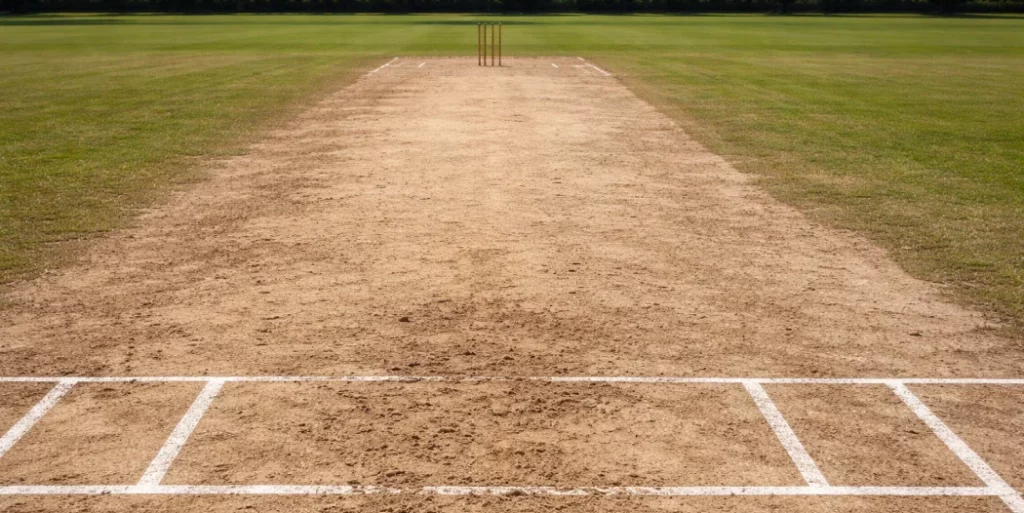
A dry pitch has very little moisture on its surface. It usually looks hard and rough, and small cracks start to appear as the match goes on. These pitches become slower over time and change their behavior, especially in longer matches.
Dry pitches often lead to exciting battles between batters and spin bowlers. These pitches test the real skills of batters and can even decide close moments like a Super Over.
Impact on matches:
- Helps spin bowlers, especially later in the game
- Batting becomes difficult in long formats
- Common in Asian and subcontinent conditions
Green Pitch
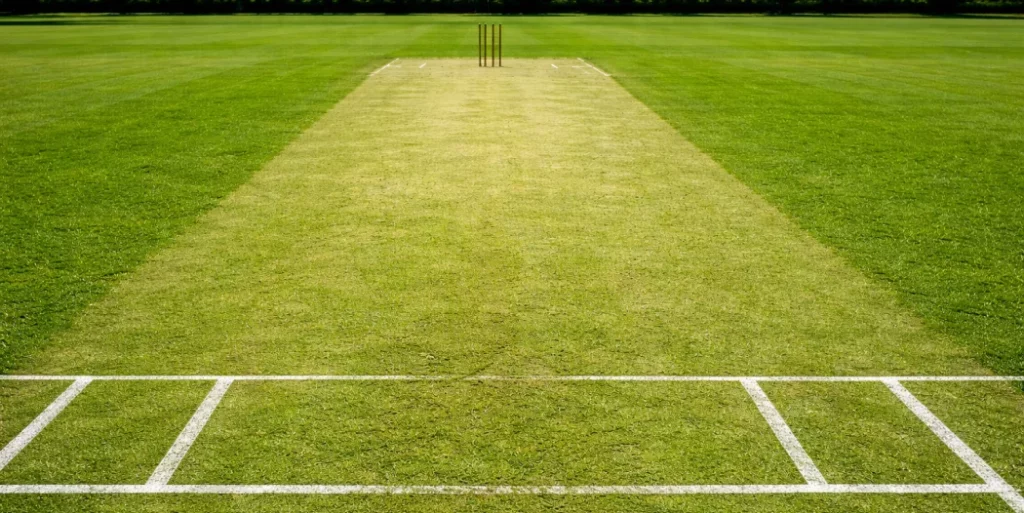
A green pitch has a clear layer of grass on its surface. This grass helps the ball move more after pitching. Green pitches are usually seen in places where the weather is cool and moist.
Green pitches are common in England, New Zealand, and some international cricket pitch venues. As the match progresses and the grass wears off, batting conditions usually improve.
Impact on matches:
- Assists fast bowlers with swing and seam
- Early wickets are common
- Batting is challenging at the start
Flat Track Pitch
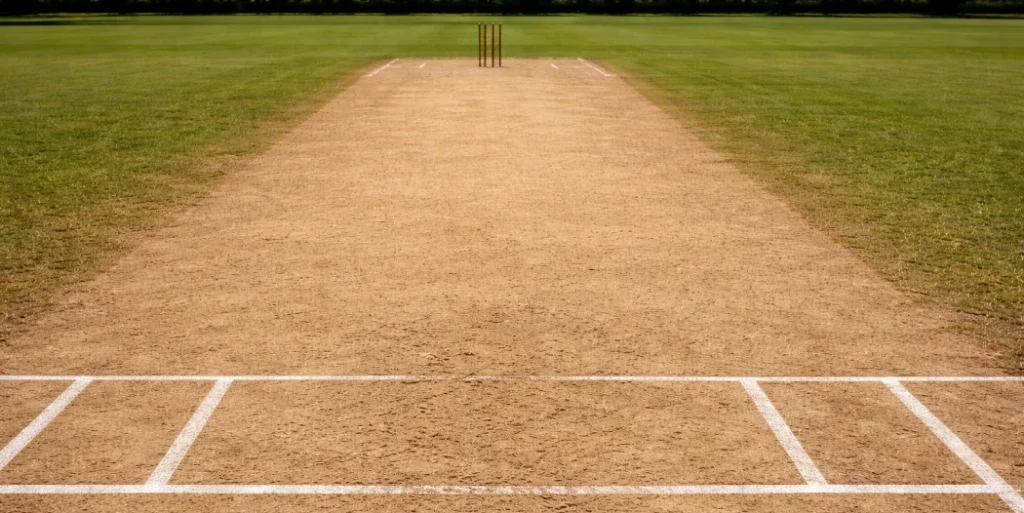
A flat track pitch is a batting-friendly surface with even bounce and very little movement for bowlers. The ball comes nicely onto the bat, which makes it easier for batters to play shots and score runs.
Many of the best cricket pitches for batting are flat tracks. These pitches are often used in limited-overs cricket because they help teams score big runs easily.
Impact on matches:
- High-scoring games
- Bowlers get minimal help
- Long partnerships are common
Wet Pitch
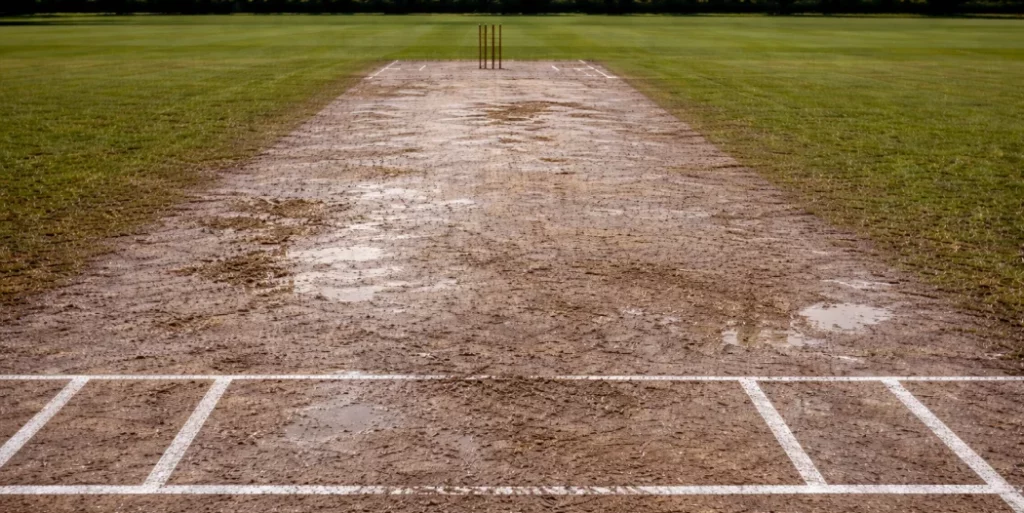
A wet pitch has moisture on the surface because of rain or heavy watering. This moisture makes the pitch unpredictable, as the ball may behave differently on each delivery. Sometimes the ball skids quickly, and other times it slows down suddenly, which makes batting risky.
Because of safety concerns, match officials closely monitor wet pitches. On such surfaces, bowlers can sometimes deliver surprise performances that avoid an expensive spell in an IPL situation.
Impact on matches:
- Ball may skid or stop unexpectedly
- Bowlers may get extra swing
- Batting becomes risky
Dusty Pitch
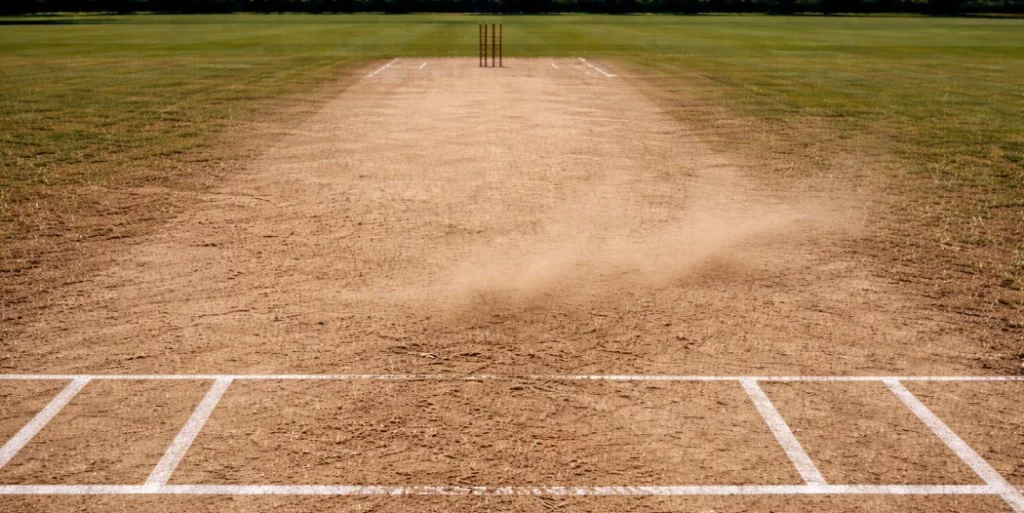
A dusty pitch has a loose and powdery surface that breaks quickly during the match. As play continues, dust comes off the pitch and helps the ball turn more after bouncing. Because of this, the pitch changes a lot as the game goes on.
Dusty pitches are common in dry regions and are known as spin-friendly cricket grounds, where spinners often play a key role in match results.
Impact on matches:
- Ideal for spin bowlers
- Uneven bounce over time
- Batting becomes harder in later innings
Dead Pitch
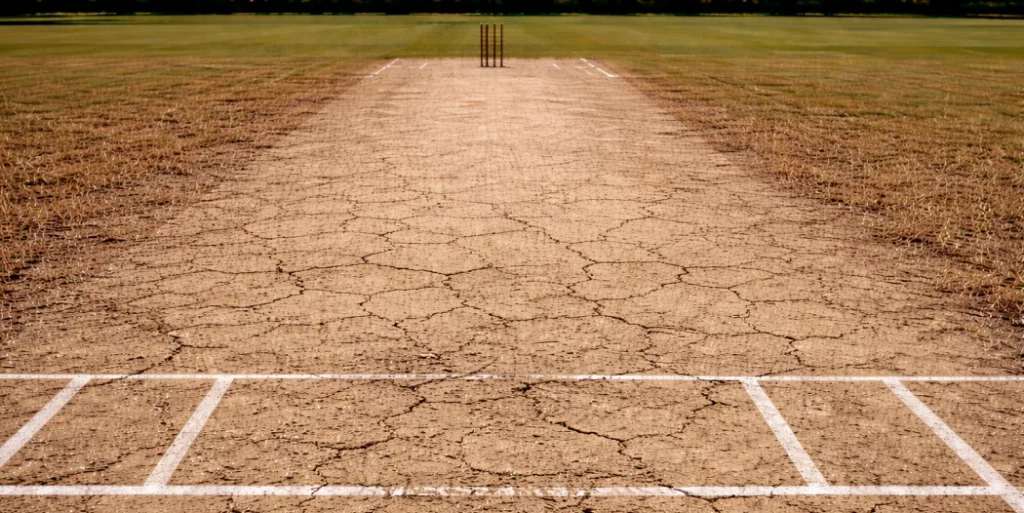
A dead pitch is a surface that offers very little help to both batters and bowlers. The pitch feels slow, and the ball does not bounce much, which makes the game less exciting.
Dead pitches are often criticized because they reduce excitement for fans and do not create a good balance between batting and bowling.
Impact on matches:
- Slow pace and low bounce
- Fewer wickets
- Matches may feel dull
How Cricket Pitch Types Impact Match Results
Different cricket pitch types influence match results in many ways:
- Toss decision: Teams may choose to bat or bowl based on pitch behavior
- Team selection: Extra spinners or fast bowlers are selected depending on conditions
- Match strategy: Batting order and bowling plans change
On a bowling-friendly pitch, teams can defend even a low score because bowlers get more help. On a flat track pitch, teams usually try to score big runs. Understanding the cricket ground pitch is very important for winning matches.
Conclusion
The cricket pitch is the most important part of any cricket match. Different pitch types, such as dry, dusty, green, and flat tracks, create different challenges for players. Each pitch behaves in its own way and affects how the game is played.
This is why pitch preparation, pitch reports, and pitch analysis are very important in modern cricket.
These factors also increase interest in match-related topics, such as the IPL Cricket Ball Price, especially among fans who closely follow professional leagues.
A good pitch creates a fair contest between batters and bowlers and makes cricket more exciting to watch.