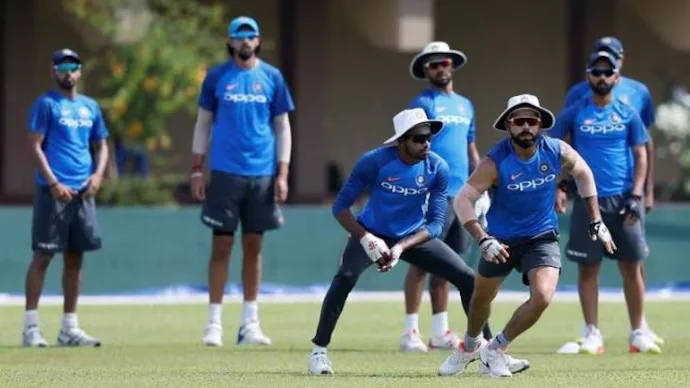
Because of this, Cricket Fitness Test has become an important part of player selection. Teams want players who can perform well throughout the match without getting tired easily.
Before selecting a player, teams check if he can handle match pressure, long playing hours, and fast movement on the field. Fitness tests help selectors make fair decisions, just like DRS in Cricket helps umpires make correct decisions.
Why Fitness Tests Matter in Cricket Selection
Cricket is very demanding today. Players need to run fast, field for long hours, and recover quickly between matches. Because of this, fitness test in cricket are taken very seriously during selection trials.
Key Points :
- A player may have good skills, but poor fitness can affect performance
- Good player fitness helps players stay active for the full season
- Fit players face fewer injuries during long tournaments
- Selectors prefer players who can stay fit for many matches
Top 7 Cricket Fitness Tests Used in Selection
Cricket fitness tests are designed according to match situations. These tests measure stamina, speed, agility, strength, and medical fitness. Below are the 7 Cricket Fitness Tests Used Before Player Selection that are commonly used in trials.
Yo-Yo Intermittent Recovery Test
The Yo-Yo Intermittent Recovery Test is an important fitness test used during cricket selection. It checks how quickly a player can recover after repeated high-intensity running, which often happens in match situations.
In this test, players run 20-meter shuttle runs at increasing speeds with short recovery breaks. The test continues until the player cannot maintain the required pace.
Why This Test Is Important
- Measures stamina and recovery ability
- Helps selectors judge match fitness
- Important for running between wickets and fielding
Bronco Fitness Test
The Bronco Fitness Test is used to test a player’s endurance and mental strength. It shows how well a player can keep running without rest under pressure.
In this test, players complete a set of shuttle runs covering different distances in one continuous effort. The test is demanding and pushes the player to maintain pace until the end.
Why This Test Is Important
- Tests full-body endurance
- Shows ability to perform under fatigue
- Useful for judging match stamina
2-km Run Test
The 2-km Run Test checks a player’s basic fitness. It shows if a player can keep running at the same speed for a longer time.
Players must complete the distance within a fixed time. This test helps selectors understand if a player can handle long playing hours during matches played at different Cricket Stadiums, where conditions and ground size may vary.
Why This Test Is Important
- Measures overall stamina
- Helps assess fitness for long spells
- Important for all playing roles
30-Meter Sprint Test
The 30-Meter Sprint Test measures a player’s speed and acceleration. Speed is very important in modern cricket for both batting and fielding.
In this test, players sprint over a short distance, and the time taken is recorded. It focuses on quick movement rather than long-distance running.
Why This Test Is Important
- Measures quick acceleration
- Important for fast singles and fielding
- Helps identify explosive movement ability
Agility Shuttle Test
The Agility Shuttle Test checks how quickly a player can change direction while running. This ability is required during fielding and quick match movements.
Players run between markers placed at different angles. The test focuses on balance, coordination, and control during fast direction changes.
Why This Test Is Important
- Measures quick direction change ability
- Important for fielding performance
- Helps improve movement control
Strength & Power Test (Vertical Jump)
The Strength & Power Test (Vertical Jump) measures lower-body strength and explosive power. This power is used in bowling run-ups, batting shots, and jumping for catches, which often play a role in creating memorable records in cricket.
In this test, players jump vertically, and the height is measured. It shows how effectively a player can use leg strength.
Why This Test Is Important
- Measures explosive lower-body power
- Important for bowlers, batsmen, and fielders
- Helps reduce injury risk
Medical & Body Composition Test
The Medical & Body Composition Test checks a player’s overall physical condition. It includes injury history and body composition assessment.
This test ensures that the player is fit to play long tournaments and can handle physical workload without major injury risk.
Why This Test Is Important
- Confirms medical fitness for selection
- Helps identify injury risks
- Ensures long-term playing readiness
How Selectors Use Fitness Test Results
Selectors first look at a player’s skill and match performance during trials and matches. Batting, bowling, and fielding ability on different cricket pitch conditions are always the first criteria for selection.
After checking skills, selectors review fitness test results to see if the player is consistent and physically ready for competitive cricket. Fitness scores help them understand how well a player can handle match pressure.
When players have similar skills, fitter players are usually preferred. This is because they can perform better in long matches and manage busy playing schedules. That is why the Cricket Fitness Test is a major factor in cricket selection today.
Conclusion
Fitness has become a very important part of cricket selection. The 7 Cricket Fitness Test Used Before Player Selection show that talent alone is not enough in today’s game. Players also need good stamina, strength, and overall fitness.
Modern cricket needs players to run fast, play long matches, and stay active, especially when playing in different conditions and with different Types of cricket balls.
Young cricketers who want to get selected should work on fitness along with skill practice. Better fitness helps improve performance and increases the chances of selection at higher levels.