Cricket is full of exciting moments and unexpected twists. Some dismissals happen due to brilliant bowling while others occur because of a batter’s own mistake. A hit wicket in cricket is one such rare and surprising way to lose your wicket.
It is one of those dismissals that can leave the crowd stunned and the batter walking back in disbelief. Cricket has several unusual ways to lose a wicket and a duck in cricket is one of them but hit wicket remains the most self-inflicted of all.
This dismissal is covered under Law 35 of the MCC Laws of Cricket and applies to all formats of the game. Whether it is a Test match or a fast-paced T20, no batter is safe from this unusual mode of dismissal.
Understanding the hit wicket rule in cricket helps fans appreciate the game better. It also shows how much focus and body control a batter needs every single time they face a delivery.
What is a Hit Wicket in Cricket?
A hit wicket in cricket occurs when a batter accidentally knocks down their own stumps or dislodges the bails with their bat or any part of their body. This happens after the bowler has entered the delivery stride and while the ball is still in play.
It can happen while the batter is playing a shot, trying to avoid a delivery, or even setting off for a run. The key point is that the batter themselves causes the wicket to be broken and not the ball or any fielder.
This is one of the rarest dismissals in cricket and is often described as a self-inflicted mistake. The batter does not need to be in the process of hitting the ball for this to happen.
When is a Batter Given Out Hit Wicket?
A batter is given out hit wicket out in cricket when their bat or body knocks down the stumps while playing a shot or setting off for a run. The ball must be in play for the dismissal to count.
The surface and conditions of the International cricket pitch can affect a batter’s footwork and balance, making this more likely on uneven ground. Even a small misstep while facing a delivery can bring an innings to a sudden end.
A batter can also be given out hit wicket in cricket while regaining balance after a shot. If they lose balance due to their batting action and fall onto the stumps, MCC Laws confirm it counts as a dismissal.
However, a batter is not out if a fielder pushes them onto the stumps while regaining balance. The umpire must decide whether the fielder contact actually caused the wicket to fall or whether it was purely incidental.
Official Hit Wicket Rule in Cricket
The hit wicket rule in cricket is defined under Law 35 of the MCC Laws of Cricket. This law applies equally across Types of cricket matches where the striker is out hit wicket if their wicket is broken by their bat or body after the bowler has entered the delivery stride and while the ball is in play.
The dismissal is valid in the following circumstances:
- While the batter is in the course of making a stroke
- While setting off immediately for the first run after playing the delivery
- While trying to avoid the ball
The MCC updated the Hit Wicket in Cricket law to clarify that receiving the ball lasts until the batter has fully gained control of their balance. So even if the ball is long gone, a batter who falls onto the stumps because of their batting action can still be given out.
The meaning of Hit Wicket in Cricket therefore goes beyond just hitting the stumps with the bat. It covers all physical contact between the batter’s body or equipment and the wicket during the active phase of playing or running.
Can a Batter Be Out Hit Wicket on a Free Hit?
No. A batter cannot be given out hit wicket on a free hit delivery. This is one of the most important exceptions to the hit wicket rule, as it gives batters complete freedom to play their shots without worry.
A free hit is awarded after a no-ball and batting teams use this opportunity to target boundaries much like they do during a Powerplay in Cricket since hit wicket and most other dismissals are not valid on this delivery.
So even if a batter accidentally knocks the stumps down while playing a free hit delivery, the umpire will not give them out. The batter is completely protected from a hit wicket dismissal on that ball.
This rule applies across all limited-overs formats including ODIs and T20 matches. However, the free hit rule does not exist in Test cricket, so in Test matches a batter can be out hit wicket at any point during a live delivery.
Famous Hit Wicket Dismissals in Cricket History
Hit wicket is one of the rarest dismissals in international cricket. Over the years a few memorable moments have reminded fans just how easily this can happen, even to the best players in the world.
| Player | Match | What Happened |
|---|---|---|
| Roy Fredericks | 1975 World Cup Final vs Australia | First ever hit wicket in ODI history. He hooked Dennis Lillee and accidentally disturbed his own stumps |
| Sachin Tendulkar | 2008 CB Series vs Australia | Went back to a Brett Lee delivery and accidentally knocked the stumps with his foot |
| Sunil Ambris | 2017 Test Series vs New Zealand | Only cricketer dismissed hit wicket in two consecutive Tests, including on his debut |
| Hardik Pandya | T20I vs England | Played a leg-side shot and his leg touched the stumps on the final ball of the innings |
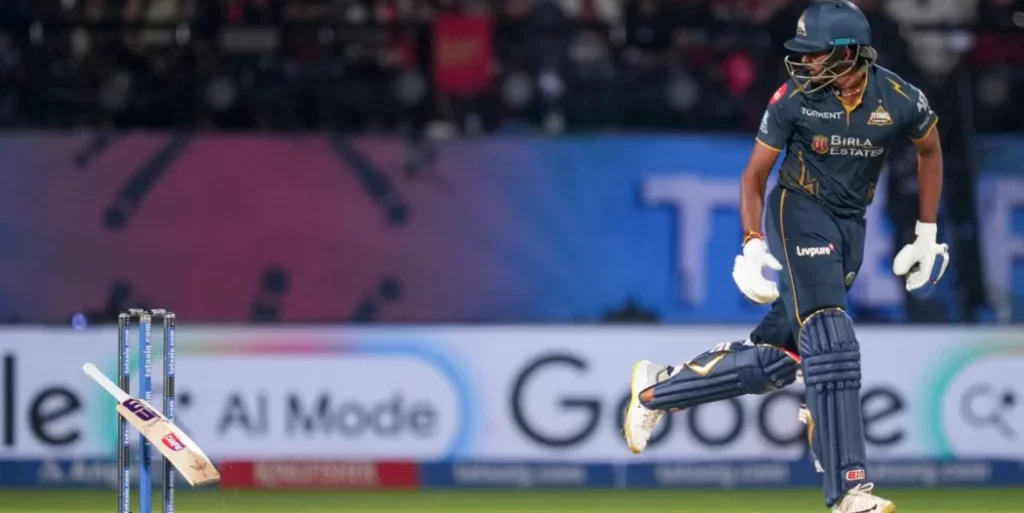
| Sai Sudharsan | IPL 2026 GT vs RCB | Bat slipped from his hand while playing a cut shot and fell back onto the stumps. Dismissed for 14 off 9 balls |
These moments highlight why hit wicket out in cricket is considered one of the most dramatic and unusual dismissals in the game. Much like cricket retired hurt which also ends an innings unexpectedly, hit wicket leaves fans and players equally surprised.
Conclusion
A hit wicket in cricket is one of the most unusual and self-inflicted ways a batter can lose their wicket. It happens when the batter’s own bat or body disturbs the stumps during an active delivery, whether while playing a shot or setting off for a run.
The official Hit Wicket in Cricket rule under Law 35 covers a wide range of situations including loss of balance after playing a stroke. One important exception is that no batter can be dismissed hit wicket on a free hit ball in limited-overs formats.
From Roy Fredericks in 1975 to Hardik Pandya in modern T20 cricket, Hit Wicket in Cricket has surprised fans across all eras. It is a powerful reminder that in cricket, staying calm, focused and in control of your body is just as important as having great technique.