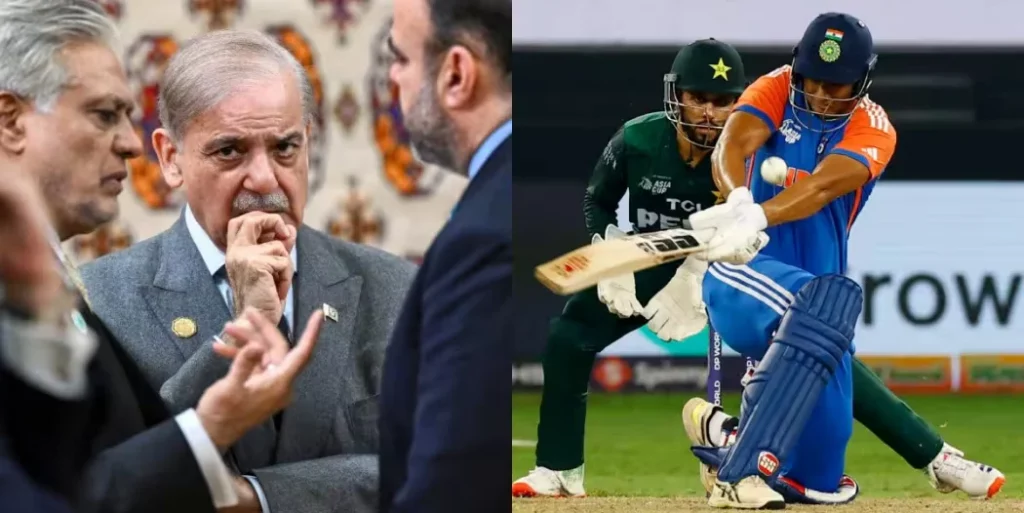
Pakistan Prime Minister Shehbaz Sharif has firmly reiterated his government’s decision that Pakistan will not play India during the group stage of the ICC Men’s T20 World Cup 2026.
Addressing members of the federal cabinet in Islamabad, Sharif said the stance reflects Pakistan’s opposition to politics entering the sporting arena and its solidarity with Bangladesh following their exclusion from the tournament.
The Prime Minister stated that Pakistan had taken a “clear and considered” position and would stand by it.
According to Sharif, the decision was not aimed at targeting any team but was meant to highlight what Pakistan views as unfair treatment by global cricket authorities.
His remarks marked the first time a senior government official openly explained the reasoning behind the boycott.
Pakistan had earlier confirmed that while its team would participate in the T20 World Cup, it would not take the field for the scheduled February 15 match against India.
The announcement followed days of uncertainty surrounding Pakistan’s participation and raised questions about communication between the Pakistan Cricket Board (PCB) and the International Cricket Council (ICC).
At the centre of the issue is the ICC’s decision to replace Bangladesh with Scotland for the T20 World Cup.
Bangladesh had reportedly requested that their matches be shifted out of India due to security concerns, proposing Sri Lanka as an alternative venue.
However, the ICC rejected the request and voted to replace them instead. Pakistan, along with Bangladesh, opposed the decision during the ICC Board vote.
PCB chairman Mohsin Naqvi has described the move as an example of “double standards,” pointing to previous instances where venue changes were accommodated for other teams.
Pakistan’s leadership believes Bangladesh, as a full member nation, was treated unfairly and deserved to remain part of the tournament.
The India–Pakistan clash is widely regarded as the most commercially valuable fixture in world cricket.
Reports suggest the boycott could lead to financial losses for the ICC and potential legal complications with broadcasters.
There is also speculation that Pakistan could face disciplinary action, including sanctions or reduced privileges in future tournaments.
Despite these concerns, Sharif has made it clear that Pakistan is unlikely to reverse its position easily.
While backchannel discussions between the ICC and PCB are reportedly ongoing, the situation remains unresolved.
With the tournament approaching, the cricketing world now waits to see whether diplomacy can bridge the gap or if the high-profile contest will indeed be absent from the T20 World Cup schedule.