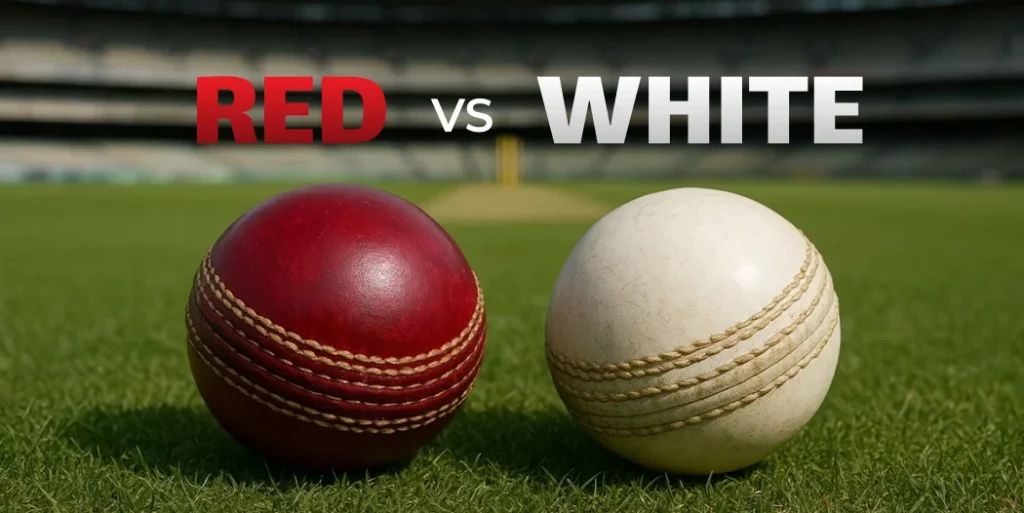
Cricket is a game where small things can make a big difference. One such thing is the color of the ball. Many fans watch cricket regularly but still ask why some matches use a red ball while others use a white ball.
This is why the topic Red Ball vs White Ball is important in modern cricket. The ball color is not chosen by chance. It depends on the match format, playing conditions, and visibility, especially in long matches like Test cricket.
The color of the ball affects batting, bowling, and fielding. It also influences match strategy and pitch behavior.
In this blog, we will explain the difference between red ball cricket and white ball cricket in a very simple way so everyone can understand it easily.
What Is Red Ball in Cricket?
Red ball in cricket is mainly used in long-format matches. The red cricket ball has been part of the game for many years and is designed to last for a long time. It is easy to see in natural daylight and keeps its shape and condition for many overs.
This format is mostly played in Test cricket, where matches can last up to five days. The red ball keeps its shine for a longer period, which helps fast bowlers swing the ball, especially in the early stages of the match.
As the game continues, the ball becomes old and rough. This makes batting more difficult and gives bowlers more control. Red ball cricket focuses on patience, technique, and mental strength rather than quick scoring.
What Is White Ball in Cricket?
White ball in cricket is used in shorter formats like One Day Internationals and T20 matches. This format is faster and more aggressive compared to red ball cricket. The white ball is specially made to be clearly visible under floodlights, which makes it perfect for day-night matches.
In white ball cricket, batters usually play attacking shots from the start. Bowlers do not get much swing, so they rely on accuracy and smart variations. Matches are shorter, which increases pressure on both batters and bowlers.
Leagues like the IPL use white balls to make matches more exciting. The IPL cricket ball is designed for high-scoring games and fast action, which fans enjoy the most.
Why Are Different Ball Colors Used in Cricket?
- Better visibility in different lighting conditions
- Red ball works best in day matches
- White ball is easy to see under floodlights
- Helps players judge speed and bounce
- Improves player safety
- Enhances TV and spectator viewing
The surface of the Cricket Pitch also reacts differently with red and white balls, which affects movement and bounce.
Key Differences Between Red Ball and White Ball Cricket
There are many clear differences between red ball cricket and white ball cricket. These differences help fans understand the Types of cricket balls used in different formats.
| Point | Red Ball Cricket | White Ball Cricket |
| Ball color | Red color ball | White color ball |
| Match format | Long-format matches | Short-format matches |
| Visibility | Best in daylight | Best under floodlights |
| Swing movement | More swing available | Limited swing |
| Ball durability | Lasts longer | Wears out faster |
| Batting style | Defensive and patient | Aggressive and fast |
| Bowling style | Focus on swing and seam | Focus on variations |
| Match pace | Slow and strategic | Fast and attacking |
Impact of Red and White Ball on Bowlers
The color of the ball plays a big role in how bowlers perform and plan their spells. Red and white balls behave differently, which directly affects bowling strategies in different formats.
Early swing
Early swing is more common with the red ball when it is new. The shiny surface helps fast bowlers move the ball in the air and trouble batters early in the match.
In white ball cricket, early swing is limited. Bowlers get only a few overs of movement, so they must focus more on accuracy.
Reverse swing
Reverse swing mostly happens in red ball cricket when the ball becomes old. One side remains shiny while the other becomes rough, helping the ball swing late.
In white ball cricket, reverse swing is rare. The ball becomes soft quickly, which reduces late movement.
Less movement
White balls offer less movement as the match progresses. This makes bowling more challenging in short formats.
Because of reduced swing and seam, bowlers must maintain good line and length to stay effective.
Bowling variations
In white ball cricket, bowling variations are very important. Bowlers use slower balls, cutters, and yorkers to surprise batters.
These variations help bowlers take wickets even when the ball does not swing much.
Spinner control
Spinners play a key role in controlling the game. With the red ball, spinners get more help as the pitch wears down.
In white ball cricket, spinners focus more on accuracy and pace control to stop runs.
DRS in Cricket
DRS in Cricket helps bowlers challenge close umpire decisions. It becomes useful when swing, seam, or spin makes judging wickets difficult.
In both red ball and white ball cricket, DRS gives bowlers confidence and supports fair decisions.
Conclusion
The comparison of Red Ball vs White Ball cricket shows how ball color can completely change the game. Red ball cricket is about patience, discipline, and long-term planning. White ball cricket is about speed, power, and excitement.
Both formats test players in different ways and offer unique challenges. In fast-paced matches, aggressive shots can sometimes lead to a duck in cricket, while longer matches require calm thinking and strong technique.
Understanding the difference between red ball and white ball cricket helps fans enjoy the game more deeply. Both formats are important and together make cricket one of the most exciting sports in the world.